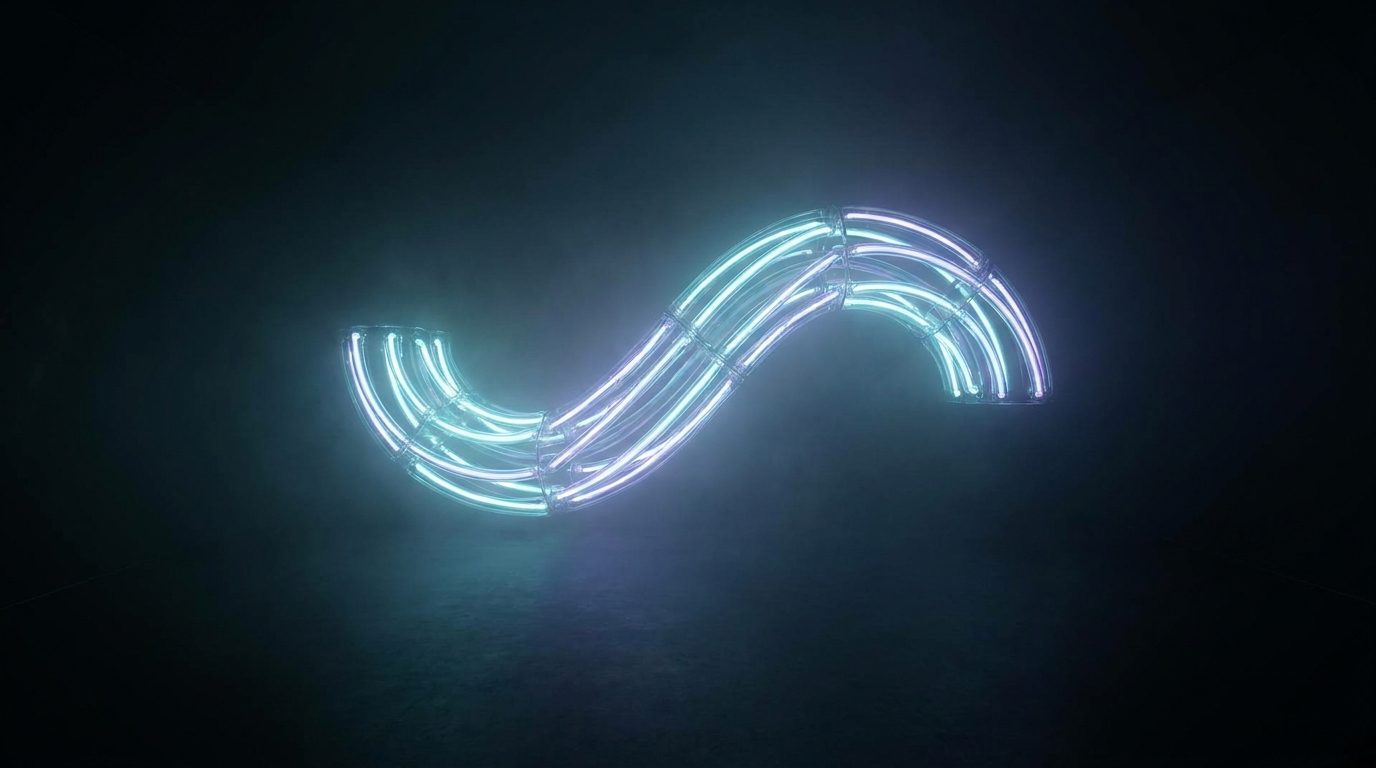
Cyberpunk is dead, but the neon is still on
Jul 30, 2026 · ≈ 12 min read
Summer 2026. I'm sitting in a windowless room in Taipei, the air conditioner humming, full Wi-Fi bars, and on my phone screen: AI-generated paintings, AI-written copy, AI queuing up the next video for me. It suddenly hit me — cyberpunk isn't "the future" anymore. It's the present. Just without the cool neon filter.
The prophecy came true, and nobody celebrated
When William Gibson wrote Neuromancer in 1984, he imagined a world of "high tech, low life." Corporations stronger than governments, bodies remade by technology, data worth more than oil. Forty years later we are living inside that book — minus the cool filter.
Look at an ordinary day in 2026:
- Your bank app replaced every human channel with AI customer service; you beg a chat box to unlock your own account.
- Delivery riders' routes are optimized by the second; they hesitate at red lights not because they fear death, but because lateness means a pay cut.
- 70% of social media content is AI-generated; you can't tell whether you're talking to a person or a model. Sometimes the other side can't tell whether you're human either.
- A cloud provider's automation script can terminate your account, and no human will ever review your appeal.
None of this is science fiction. This is what happened last week.
Why is the neon still on?
What's the core image of cyberpunk aesthetics? Neon. Reflected on wet asphalt in the rain — purple, cyan, pink. It stands for a kind of resistance in the dark: no matter how bad the world gets, someone will always light a lamp at night.
The image has been abused for years — phone wallpapers, T-shirt prints, Spotify playlist covers. But beneath the commercialized surface, its core still holds: in a world run by giant systems, an individual can still choose to emit their own light.
That's why I still keep a blog. Pure static HTML, no tracking scripts, no ads, no platform dependency. This site itself is a piece of neon — not the glamorous kind co-opted by capitalism, but the kind in a back alley: slightly crooked, flickering now and then.
From prophecy to realism
As a literary genre, cyberpunk really has "died" — once the world it described became everyday life, it stopped being science fiction. But its spiritual core became more real than ever.
Gibson later said in an interview that he stopped writing about the future because the future was arriving too fast. He turned to contemporary fiction, because "the present is already sci-fi enough." In 2026, that line lands harder than ever.
We don't need more dystopian prophecies. What we need is a way to live inside the dystopia. Decentralization isn't a slogan, it's a strategy. Open source isn't a faith, it's insurance. Blogging isn't nostalgia, it's a signal.
One lamp, one site
This site's accent color is cyan-blue (#47c2e8). Not a coincidence. It's a neon color. On a black background it looks like a lamp late at night.
If you're reading this in 2026, you've probably been through at least one cloud account ban, one social platform algorithm misjudgment, one infinite loop of AI customer service. You know that feeling of powerlessness. But you're also reading a personal blog — which means you're still looking for signals instead of passively accepting what gets pushed at you.
Cyberpunk is dead. The neon is still on. That's enough.
You can light your own lamp too. No server needed, no database needed. One HTML file is enough.